The changes in the Industry 4.0 era have certainly brought about significant changes, particularly in the healthcare sector. Technology is increasingly demonstrating its presence and playing a crucial role in enabling doctors and healthcare professionals to achieve better quality healthcare for patients.
As a result, many hospitals and other healthcare facilities are now using Industry 4.0 medical equipment.
So, what medical equipment is included in the Industry 4.0 era?
1. Computerized Tomography Scan (CT-Scan)
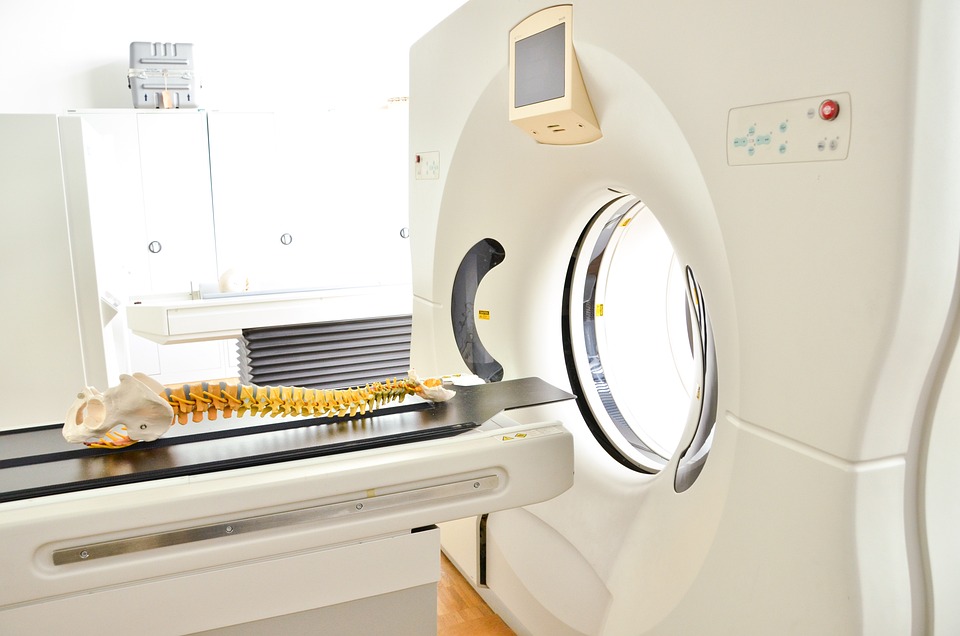
A CT-Scan can be used to observe the anatomy of a patient’s body. It uses X-rays.
According to information summarized by radiologyinfo.org, this X-ray medical device helps radiologists, doctors, and practitioners detect various diseases and conditions in patients.
These include cancer, cardiovascular disease, infectious diseases, appendicitis, trauma, and musculoskeletal disorders.
CT scans provide accurate, fast, non-invasive, and painless data for patients.
2. Magnetic Resonance Imaging (MRI)
Magnetic Resonance Imaging (MRI), also known as magnetic resonance imaging (MRI), is a state-of-the-art diagnostic tool that detects and views the entire human internal body in detail using magnetic fields and radio waves.
According to information from the HelloSehat website, this machine works like a scanner, allowing it to view and examine human organs, such as the heart, nerves, spine, breasts, and brain.
A journal written by Mulyono Notosiswoyo and Susy Suswati details the advantages and benefits of MRI.
This includes the fact that MRI is superior for detecting abnormalities in soft tissues such as the brain, bone marrow, and musculoskeletal (muscles and joints).
Furthermore, it can provide clear anatomical images, perform functional examinations such as diffusion, perfusion, and spectroscopy, and create cross-sectional, vertical, and oblique images without changing the patient’s position.
3. Picture Archiving and Communication System (PACS)
The Picture Archiving and Communication System (PACS) is a hospital system that supports radiology needs, not a medical device or machine.
PACS has the ability to provide timely and efficient access to interpretation and related data.
According to information from serachhealthit.techtarget.com, PACS is a medical imaging technology used, primarily by healthcare institutions, to digitally store and transmit electronic images and clinically relevant and accurate reports.
Dr. Vonny explained the advantages of PACS in her forum, explaining that this technology can reduce costs and time.
Patients no longer have to wait for radiology results printed on film; they can be accessed immediately by the doctor concerned for immediate follow-up.
4. Catheterization Laboratory (Cath-Lab)
The Cath-Lab can be used to detect sudden death or to prevent sudden death due to heart attacks.
A guide to the “Cardiac and Blood Vessel Catheterization Laboratory” will explain that a Cath-Lab, or cardiac catheterization, is the place where catheterization procedures are performed.
This involves inserting a small tube into an artery or vein and tracing it to the heart, other blood vessels, and other target organs using X-rays.
According to docdoc.com, cardiac catheterization is essential for testing whether planned interventions, prevention, or control measures are working effectively.
The advantages of the Cath-Lab include its advanced, full-spec, and advanced technology, enabling a variety of interventional procedures.
It can produce three-dimensional images from head to toe and provide a very clear view of blood vessel structures.
These are four medical devices in the 4.0 era, which continue to evolve along with increasingly sophisticated technology.
This makes it easier for doctors to treat patients accurately, quickly, and in a controlled manner.